.png)
Roofing Red Flags: 9 Early Signs Your Roof Is Headed for Trouble
January 2, 2026
•
Written By
Ladder Lions Roofing

When Your Roof Starts Whispering, It’s Time to Listen
You know the kind of roof problem I’m talking about — the one that starts as a little red flag: a shingle curling just slightly, a gutter full of gritty fluff after a hard rain, or a faint stain on the ceiling that you tell yourself you’ll check “later.”
Out here in Aurora, with winter snows, summer storms, and the occasional surprise hail, those small warnings can turn into major headaches if you ignore them.
This post is your homeowner roof checklist, built on real-world roof deterioration signs we see every season. No scare tactics. No upsells. Just straight talk from someone who’s been up on roofs for decades — and who wants to help you catch problems before they cost you big time.
What you’ll get from this guide:
- A clear look at 9 early roof warning signs to watch for around Aurora
- How to spot trouble from the ground or attic before damage spreads
- Why paying attention now can save you hundreds (or thousands) later
- What repair or replacement might look like, and when to call in the pros
- How a smart inspection and honest work from a local crew can keep your home safe
If you spot anything on this list, Ladder Lions Roofing can help.
Why These Warning Signs Matter — Especially Around Here
Your roof isn't just shingles and wood. In Southeast Indiana, it’s a shield against all kinds of weather — freezing winters, spring storms, humid summers, fallen leaves, and all the rest.
When shingles crack, flashing loosens, or granules wash out, that shield begins to fail. Moisture gets in. Wood rots. Insulation gets soggy. Bad things start heading into your home — often quietly, unseen, until you’re staring at drywall damage or a soggy attic in April.
Local building codes expect roofs to have proper underlayment, ventilation, drip edges, and ice-and-water shields. When your roof shows early roof deterioration signs, it’s not just about leaks — it’s about protecting your home and staying up to standard.
That’s why catching the warning signs early is worth more than a quick patch. It could save you from major repairs, or worse — a full replacement sooner than you planned.
Before You Jump In: What to Know First
If something on your roof or in your attic looks off, don’t panic. But don’t wait either. Before you decide what to do, here’s what to think about:
Budget range.
Small fixes — a few shingles, some flashing — might run a few hundred dollars. But if the damage is widespread, a full roof in our area typically costs between $7,000–$12,000, depending on size and materials.
Permits and codes.
Whether it’s a repair or full roof replacement, towns around Aurora require permits. We handle the paperwork so you don’t have to.
Material choices.
Asphalt shingles remain common. But metal and synthetic options bring longer lifespan and better resistance to weather swings. If we replace your roof, we’ll walk you through what makes sense — not what makes us the most money.
Start with an inspection.
It’s the easiest, smartest move. We offer free, no-pressure inspections — just straight talk about what’s going on and what needs doing (if anything).
9 Roofing Red Flags You Shouldn’t Ignore
These are the most common signs we see that tell you your roof might be headed for trouble. If you spot any of them, it’s time to pay attention.
1. Shingles That Are Cracked, Curling, or Missing
When shingles bail on you — curling up, cracking along the edges, or gone completely — your roof’s outer shell is breaking down. That’s a serious early roof warning sign because once the shingles are compromised, water has an easier path inside.

2. Roof Granules in Gutters or Downspouts
If you find sand-like granule buildup in your gutters or at the bottom of downspouts, that’s not just dirt — that’s your shingles wearing out. Those granules protect the roof from sun, rain, and wind. Lose enough of them and the asphalt beneath is exposed. That accelerates deterioration.
3. Water Stains on Ceilings or Walls Inside Your Home
Seeing brown spots on the ceiling or walls? That’s a red flag that water’s sneaking in. Even a small leak can lead to insulation damage, rot, or mold — especially in humid Indiana summers or freezing winters.
4. Flashing Around Chimneys, Vents, or Skylights That’s Bent, Loose, or Missing
Flashing is the metal barrier that keeps water from sliding under vulnerable areas. If that flashing is loose or gone, rainwater has a straight path into your attic. That’s one of the most common causes we see for leaks and structural damage.
5. Sagging Rooflines or Uneven Roof Deck
If the slope of your roof dips in places or the eaves look uneven, it might be more than a cosmetic issue. That usually means moisture has reached the wood beneath the shingles, weakening the structure. It’s a major red flag you don’t want to ignore.
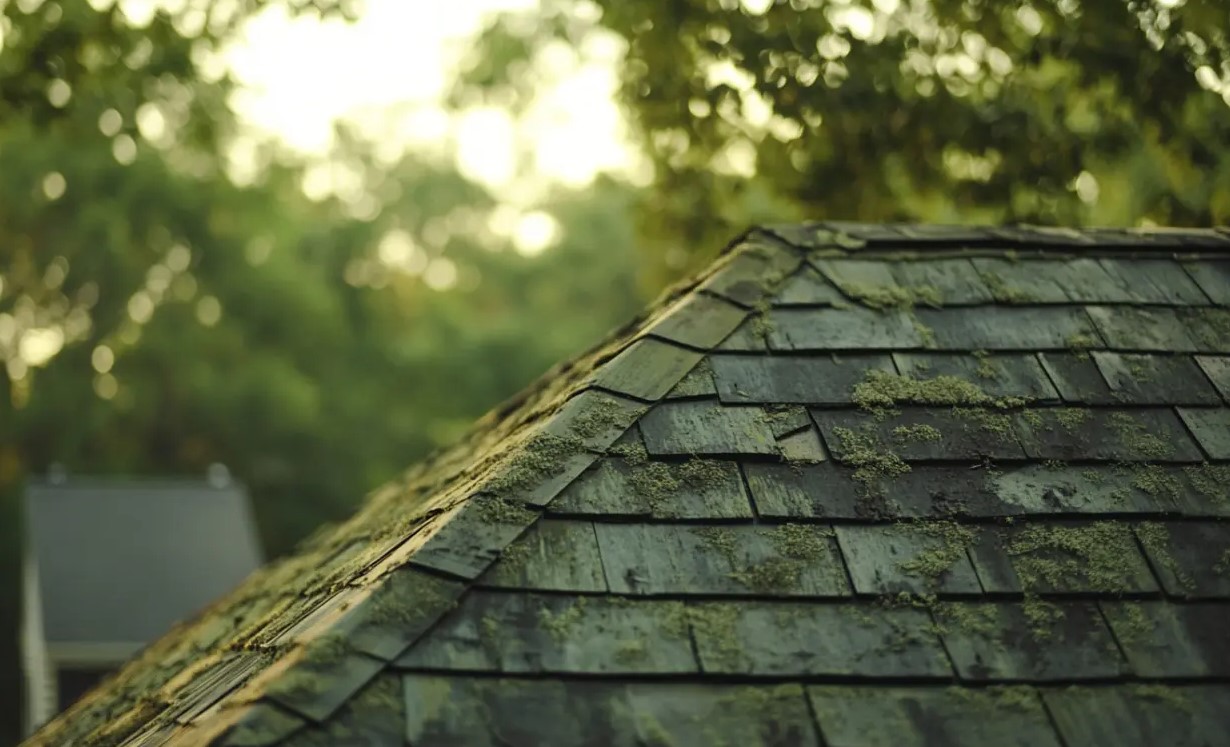
6. Dark Streaks, Algae, or Mold Growing on Shingles
Those black or green streaks might look like dirt — but they’re likely algae or mold. Once that takes hold, shingles deteriorate faster. Moisture stays longer. The roof ages quicker. It’s a subtle but serious sign of wear.
7. Ice Dams or Icicles Hanging from Gutters in Winter
Icicles might look pretty, but in Indiana they often mean trouble. They signal that heat is escaping your attic or your gutters are backed up — letting water creep under shingles and cause leaks. That’s a classic winter-time red flag roof owners ignore at their peril.
8. Moss or Plant Growth on the Roof Surface
Moss holds water against the roof surface. Over time, that constant dampness wears away shingles, rots wood, and invites leaks. Especially on older roofs or homes shaded by trees — a mossy roof isn’t just messy, it’s risky.
9. Roof Is 20 Years or Older — Even If It Looks Fine
Just because a roof looks okay doesn’t mean it is. Asphalt shingles generally last 20–30 years in our area’s climate. Once your roof hits 20, it’s time to start watching closely. Old materials, weather wear, and unseen damage can add up fast — even if nothing’s leaking yet.
Why Ignoring Small Problems Almost Always Means Bigger Repairs Later
A missing shingle here, a little water stain there — those might seem harmless. But here's how small issues snowball into big ones:
- When shingles are compromised, rain or melting snow seeps in.
- It touches the wood decking, insulation, and framing.
- Over time, moisture eats away at wood, warps beams, and brings mold or rot.
- Repair costs multiply, sometimes beyond what it’d take to replace the whole roof.
For houses around Aurora and Southeast Indiana — with our mix of freeze-thaw winters, humid summers, and sudden storms — waiting is often what makes a small fix turn into big trouble.
That’s why a simple homeowner roof checklist — done once or twice a year — can make a world of difference.
What We Do to Help
- Free inspections to catch trouble early before it spreads
- Honest feedback: if a patch will do, we say so; if your roof’s toast, we tell you
- Repairs or replacements done by licensed, insured crews who know local weather like the back of their hand
- Work backed by our 10‑Year No‑Leak Guarantee — because good work means something, no matter when it’s done
Top Roofing Questions Aurora Homeowners Ask About Roof Red Flags
We talk to a lot of folks in Aurora who notice something odd on their roof — but aren’t sure what it means or what to do next. If you're wondering whether your roof's trying to tell you something, these are the most common questions we hear from your neighbors (and our answers to them).
Do I need a new roof if a few shingles are missing?
You may not need a full roof replacement if only a few shingles are missing. However, missing shingles are a clear sign that your roof has taken some wear, and it’s worth getting checked. Sometimes it’s a simple patch job — sometimes it points to deeper issues underneath.
Are granules in my gutters something to worry about?
Yes, granules in your gutters are an early sign of roof deterioration. Those tiny pebbles come from your shingles and protect them from sun and weather. When they start falling off, your roof is aging faster than it should.
Is moss on the roof a real problem, or just ugly?
Moss on the roof is a real problem, not just cosmetic. It traps moisture against your shingles, which can speed up decay and lead to rot. If you’re seeing moss, it’s time to get things cleaned up and checked out.
How often should I inspect my roof for problems?
You should inspect your roof at least twice a year — once in the spring and again in the fall. We also recommend checking after major storms. It doesn’t have to be fancy; even a quick glance from the ground can spot issues early.
My roof’s 20 years old but not leaking. Do I still need to replace it?
Yes, even if your 20-year-old roof isn’t leaking, it may still need replacement. Shingles break down over time, and hidden issues can build up under the surface. A proactive inspection can tell you where things stand — and whether it’s time to plan for a new roof.
Can I fix a small roof issue myself?
Yes, small roof issues like reattaching a gutter or clearing debris can be done safely by handy homeowners — but be careful. If it involves climbing, loose shingles, or anything structural, it’s best to leave it to the pros. Safety (and your insurance) matters.
Final Thoughts: Hear the Whispers Before They Turn Into Screams
Roofs don’t often fail with a crash. They fail quietly. A cough here, a groan there. And if you listen carefully, you can catch it before it becomes a disaster.
The early roof warning signs we talked about aren’t dramatic. No crashing branches, no midnight leaks — just quiet signals that your roof’s work is getting tougher than it used to be.
But you don’t have to wait for a leak to get someone on the ladder. With a simple inspection and some honest talk, you can protect your home for less than you’d expect — and sleep easier knowing your roof is doing its job.
After more than 35 years in this business, Ladder Lions Roofing knows what to look for. We know how to fix it. And we know what it means when a job is done right.
If you’ve spotted anything that looks like trouble, or you just want a second pair of eyes —
Schedule your free inspection today.
We’ve got you covered — before the roof starts screaming.
Recent Articles
Commercial Roofing
Commercial Roof Maintenance: A Practical Guide for Building Owners
September 22, 2026
Residential Roofing
The Platinum Standard: Why Shingle Manufacturer Certifications Control the Life of Your Roof Warranty
September 15, 2026
Residential Roofing
GAF vs Owens Corning Shingles: An Honest Comparison
September 15, 2026
Commercial Gutters
Commercial Gutter Overload: Avoiding Building Erosion and Foundation Damage During August Storms
August 17, 2026