.png)
How Aging Roofs Fail: The Science Behind Material Breakdown Over Time in Batesville
February 18, 2026
•
Written By
Ladder Lions Roofing
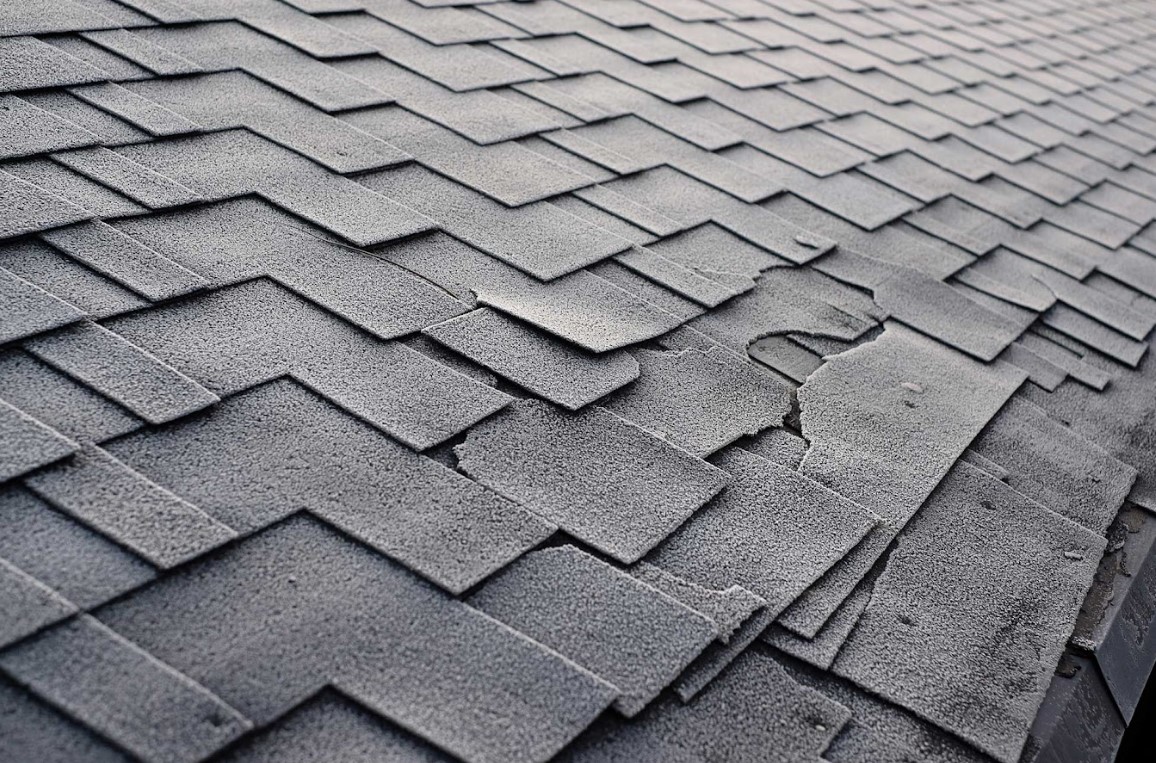
If you’ve lived in Batesville long enough, you’ve seen it happen.
A roof looks solid one year. Then a season or two later, shingles start curling. You notice grit in the gutters. Maybe there’s a faint ceiling stain after a heavy rain.
It can feel sudden.
But roof failure is rarely sudden.
Most problems are the final chapter in a long story. Aging roof materials respond to sun, moisture, wind, and temperature changes year after year. Roofing material degradation happens gradually. By the time you see a leak, the breakdown has usually been underway for a while.
Understanding how roofing materials age helps you see that process earlier. And when you see it earlier, you can plan instead of react.
Here’s what we’ll walk through:
- What actually happens to roofing materials as they age
- The stages roofs move through before failure
- Why roof lifespan is shaped by several factors in Southeast Indiana
- How ventilation and installation influence long-term durability
- How to tell when normal aging becomes structural risk
If you’re unsure where your roof stands in that cycle, Ladder Lions Roofing can help.
Understanding Roofing Material Degradation: The Science in Simple Terms
If we’re going to talk about how aging roofs fail, we need to start with what’s happening at the material level.
Roofs don’t just “wear out.” They change chemically and physically over time.
What Is Roofing Material Degradation?
Roofing material degradation is the gradual weakening of shingles, underlayment, flashing, and decking due to:
- Ultraviolet radiation
- Oxidation
- Expansion and contraction
- Moisture intrusion
- Wind stress
- Time
Take asphalt shingles as an example. They contain oils that keep them flexible. Over years of sun exposure, those oils evaporate through oxidation. As flexibility decreases, brittleness increases.
When shingles become brittle, they crack more easily under stress. Once cracks form, water has a path inward.
That is the science behind the early stages of failure.
It is slow. It is predictable. And it happens to every roof eventually.
Why Roof Lifespan Factors Are Different in Batesville
Now let’s connect that science to where we live.
In Batesville, roof lifespan is shaped by several factors tied directly to climate. Summers bring high heat and humidity. Winters bring freezing temperatures and thaw cycles. Rainfall can be heavy and sustained. Snow sits on roofs before melting.
Heat speeds up chemical breakdown. Cold causes contraction. Moisture enters tiny fractures and expands when frozen. That freeze-thaw cycle adds mechanical stress year after year.
Over time, these combined forces accelerate roofing material degradation more than in milder regions.
That does not mean roofs here fail quickly. It means the aging process follows a pattern shaped by our environment.
Understanding those roof lifespan factors helps explain why materials behave the way they do.
The Stages of Roof Aging: How Failure Actually Happens
Once you understand the science and the climate, the next step is recognizing the progression.
Aging roof materials move through identifiable stages before they fail. Each stage builds on the one before it.
If you want a practical breakdown of the early signs of roof deterioration homeowners can spot from the ground, we cover that in detail in Roofing Red Flags: 9 Early Signs Your Roof Is Headed for Trouble.
Stage 1: Granule Loss Begins
Granules protect shingles from ultraviolet exposure.
As shingles age, granules loosen and wash into gutters. You might not think much of it at first. But once protective granules thin out, the asphalt layer beneath absorbs more direct sunlight.
That increased exposure speeds up oxidation and accelerates roofing material degradation.
Granule loss is often the first visible sign that your roof has entered the aging cycle.
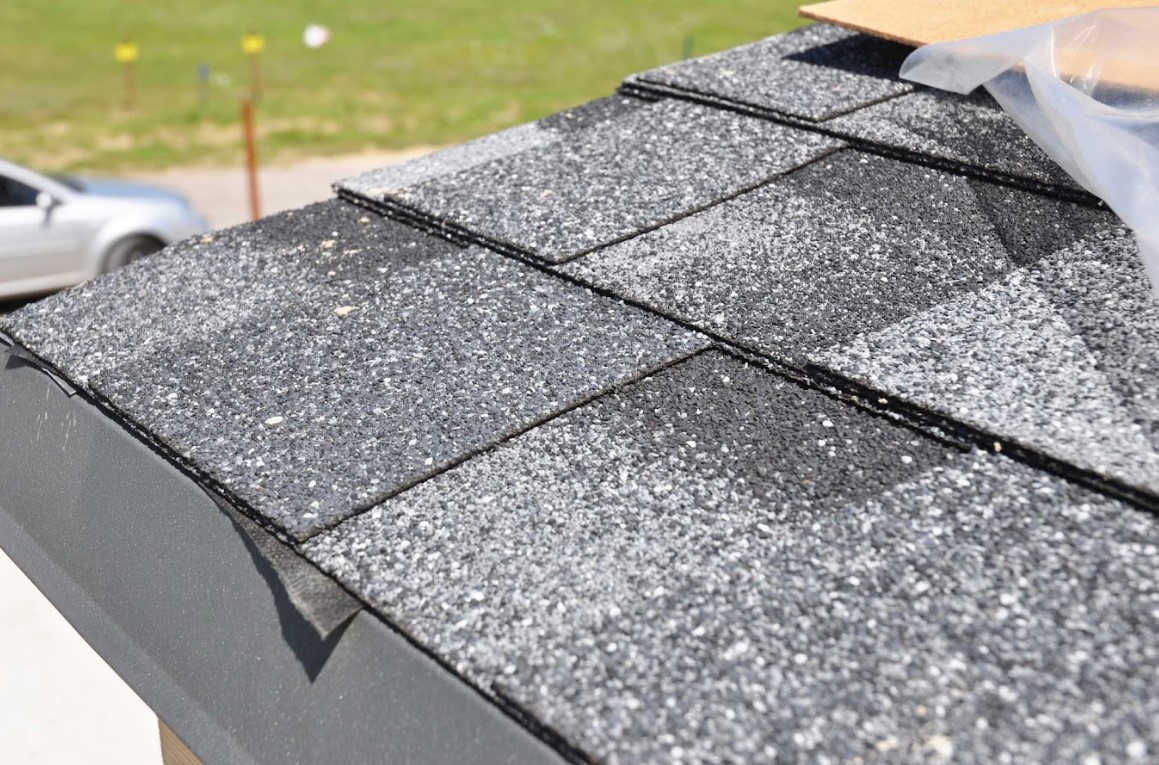
Stage 2: Seal Strip Weakening
As materials continue aging, adhesive seal strips lose bonding strength.
These strips are what help shingles resist wind uplift. When they weaken, shingles may lift slightly during storms. Even small lifting allows wind-driven rain to work underneath.
At this point, aging roof materials shift from simply “older” to more vulnerable.
Stage 3: Brittleness and Micro-Cracking
With ongoing oxidation and temperature swings, shingles lose elasticity.
Thermal movement causes tiny fractures. Moisture enters those fractures. In winter, freezing expands them further.
This stage marks a clear transition from surface wear to structural compromise.
Roofing material degradation is no longer cosmetic. It is mechanical.
Stage 4: Curling and Cupping
As flexibility declines further, shingles begin curling at edges or cupping in the middle.
Curling increases exposure to wind and rain. It also creates uneven surfaces where water can pool or penetrate more easily.
When shingles reach this stage, aging roof materials are often nearing the end of functional performance.
Stage 5: Underlayment Exposure
As shingles thin and shift, the underlayment carries more of the weather burden.
Underlayment is not meant to serve as the primary barrier long-term. Once it begins handling repeated moisture exposure, failure risk increases.
This is where many homeowners first notice interior signs.
But the material breakdown began years earlier.
Stage 6: Decking Deterioration
If moisture consistently penetrates beneath the outer layers, roof decking absorbs it.
Wood weakens gradually under repeated exposure. It softens, delaminates, or rots.
By this stage, roof failure is no longer about aging shingles. It becomes structural.
And every step in that progression can be traced back to the predictable science of roofing material degradation over time.
How Ventilation Accelerates or Slows Roof Aging
At this point, it becomes clear that temperature and moisture drive the aging process.
That is where ventilation comes in.
Poor attic ventilation traps heat beneath the roof deck. Elevated temperatures increase the rate of asphalt oxidation. In simple terms, hotter shingles age faster.
Moisture trapped in the attic adds another layer of stress. Persistent humidity affects decking, fasteners, and underlayment from below.
Proper airflow does not prevent aging roof materials from breaking down. It slows the process so materials reach their expected lifespan instead of failing prematurely.
Ventilation is one of the most influential roof lifespan factors because it directly affects the speed of material degradation.
How Installation Quality Impacts Roofing Material Degradation
Even when materials are high quality and ventilation is balanced, installation still matters.
Improper nail placement can weaken shingles from day one. Over-driven nails cut into the shingle mat. Under-driven nails allow movement during wind events. Misaligned shingles create stress points.
Flashing errors often allow moisture intrusion long before shingles themselves have fully degraded.
These installation flaws do not cause immediate collapse. Instead, they create areas where aging roof materials deteriorate faster than surrounding sections.
Roof lifespan is shaped by several factors, and installation quality is one of the most important variables in how evenly materials age.
Comparing Roofing Materials and Longevity
Different materials respond to aging forces differently, but all follow the same underlying principles.
Asphalt Shingles
Asphalt shingles primarily degrade through oxidation and granule loss.
In this region, a properly installed asphalt system typically lasts 20 to 30 years. Ventilation, installation precision, and maintenance influence where it falls within that range.
Metal Roofing
Metal does not oxidize like asphalt, but expansion and contraction still occur.
Fasteners loosen gradually. Condensation can form beneath panels if airflow is insufficient. Over decades, these factors influence performance.
Metal ages differently, but it still ages.
Architectural and Impact-Resistant Shingles
Thicker shingles resist wind and mechanical stress better than standard three-tab systems.
They slow the timeline of roofing material degradation but do not eliminate it. Environmental roof lifespan factors still apply.
Understanding how materials differ helps homeowners make informed decisions about longevity.
Financial Implications of Aging Roof Materials
When roofing materials break down over time, financial considerations follow.
Insurance carriers often assess roof age during underwriting. Buyers factor visible wear into negotiations. An aging roof can influence appraisal outcomes.
More importantly, replacing a roof at the predictable end of its lifespan is usually less expensive than repairing interior damage caused by prolonged moisture intrusion.
Material breakdown is gradual. Structural and interior damage can escalate quickly once failure advances past a certain point.
Understanding the science allows homeowners in Batesville to plan around timing rather than react to emergencies.
How Ladder Lions Roofing Evaluates Aging Roofs
When we evaluate roofs locally, we are assessing where the system sits in the aging process.
We examine:
- Granule retention patterns
- Shingle flexibility
- Seal integrity
- Flashing durability
- Ventilation balance
- Decking stability
We are looking for signs your roofing materials are aging normally versus indicators of advanced roofing material degradation.
Sometimes the roof still has solid years ahead. Sometimes the progression suggests replacement is the responsible choice.
Clear, evidence-based evaluation helps remove guesswork from decisions.
Roof Aging and Lifespan Questions in Batesville
As roofs age, most homeowners start asking the same practical questions. Below are straightforward answers to help you better understand how aging roof materials fail and what roof lifespan factors matter most in Batesville.
How long should a roof last in Batesville?
A roof in Batesville should typically last 20 to 30 years when properly installed and ventilated. Roof lifespan is shaped by several factors, including sun exposure, freeze-thaw cycles, moisture levels, and installation quality. Local climate conditions play a direct role in how quickly roofing material degradation occurs.
What are the first signs that roofing materials are aging?
The first signs that roofing materials are aging usually include granule loss, minor curling, and increased brittleness. These early indicators show that oxidation and material breakdown have begun. Catching these signs early helps prevent more advanced roofing material degradation.
Does ventilation affect how aging roof materials break down?
Yes, ventilation affects how aging roof materials break down over time. Excess attic heat accelerates oxidation, while trapped moisture increases structural stress. Proper airflow slows the chemical and mechanical processes that lead to failure.
Can older shingles still be repaired?
Yes, older shingles can sometimes be repaired if degradation is limited to small sections. When aging roof materials show widespread cracking or seal failure, replacement is usually the more reliable option. The stage of material breakdown determines whether roof repair is practical.
Should I replace my roof before it starts leaking?
Yes, replacing your roof before it starts leaking helps prevent structural damage. Visible leaks often mean roofing material degradation has progressed through multiple aging stages. Acting before interior damage occurs typically reduces long-term costs.
Are premium shingles immune to roofing material degradation?
No, premium shingles are not immune to roofing material degradation. They generally age more slowly due to thicker construction, but roof lifespan factors like UV exposure, ventilation, and installation still influence their durability.
Final Thoughts: Roof Failure Is a Predictable Process
Aging roof materials fail in stages.
They lose protection. They crack. They weaken. Eventually, they allow moisture through.
When you understand how roofing material degradation works over time, roof failure stops feeling random.
It becomes predictable.
We’ve been working on homes around Batesville for decades. We believe in honest evaluations, careful craftsmanship, and helping homeowners understand what is happening above their heads.
If you’d like to know where your roof stands in its lifespan, schedule your free inspection today.
Let Us Tame Your Roof.
Recent Articles
Commercial Roofing
Commercial Roof Maintenance: A Practical Guide for Building Owners
September 22, 2026
Residential Roofing
The Platinum Standard: Why Shingle Manufacturer Certifications Control the Life of Your Roof Warranty
September 15, 2026
Residential Roofing
GAF vs Owens Corning Shingles: An Honest Comparison
September 15, 2026
Commercial Gutters
Commercial Gutter Overload: Avoiding Building Erosion and Foundation Damage During August Storms
August 17, 2026