.png)
Commercial Gutter Overload: Avoiding Building Erosion and Foundation Damage During August Storms
August 17, 2026
•
Written By
Ladder Lions Roofing
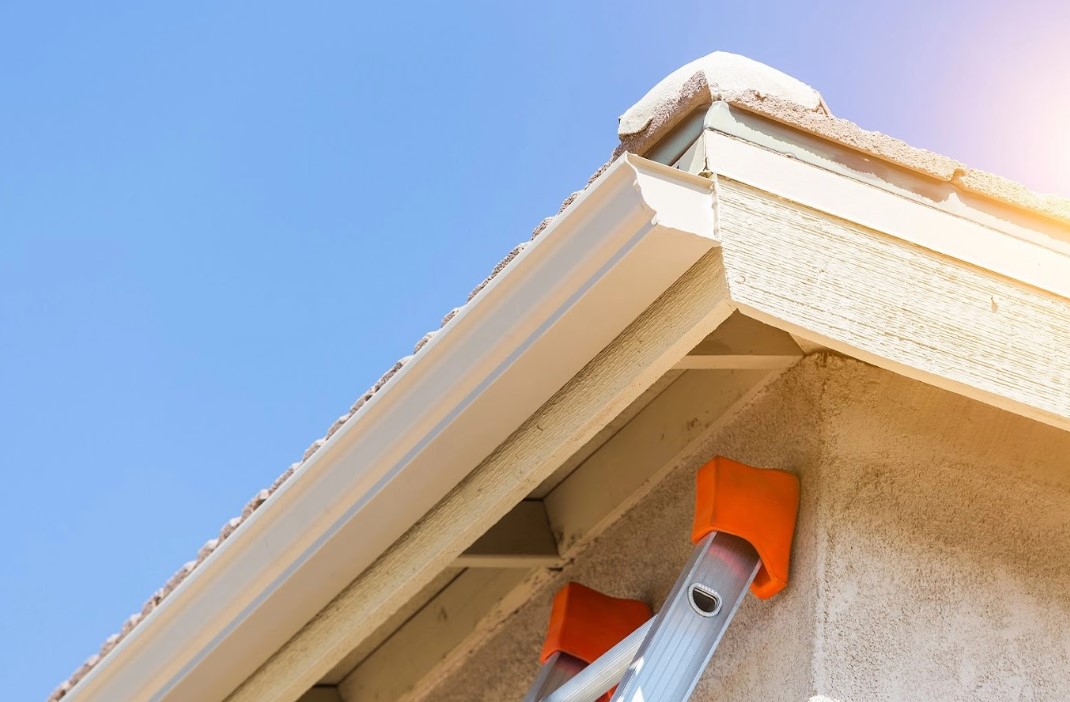
August rain in Southeast Indiana doesn’t always arrive politely. One minute, the parking lot is dry, and the next, your commercial roof is moving a whole lot of water in a hurry.
That’s when gutters, roof drains, and downspouts earn their keep.
For businesses in Batesville and Greensburg, an overloaded drainage system can send water over roof edges, down exterior walls, across sidewalks, and into the soil beside the foundation. Over time, that can contribute to erosion, damaged fascia, wet interiors, drainage problems, and water collecting where the building really doesn’t need it.
The good news is that overloaded commercial gutters usually give you some warning. Debris, poor pitch, restricted downspouts, sagging sections, and undersized drainage components can all show up before the next hard storm turns a small issue into a much larger one.
Here’s what we’ll cover:
- Why August storms expose commercial drainage problems
- How overflowing gutters affect roofs, walls, soil, and foundations
- The most common reasons commercial gutters can’t keep up
- What flat and low-slope roofs need to drain properly
- When cleaning is enough and when repairs or upgrades make more sense
- What Batesville and Greensburg property owners can check before severe weather
The Short Answer: Why Commercial Gutter Overload Matters
Commercial gutters are supposed to collect roof runoff and move it safely away from the building. When they’re clogged, damaged, poorly pitched, or too small for the amount of water coming off the roof, that runoff has to go somewhere else. It can spill over roof edges, saturate soil, erode landscaping, stain exterior walls, and contribute to water intrusion around the building.
Why August Storms Put Commercial Drainage Systems to the Test
Commercial buildings often have a lot more roof area than homes. That means a short, heavy downpour can produce a substantial amount of runoff in a very short time.
Every square foot of roofing directs rainwater somewhere. On a large retail building, church, apartment complex, storage facility, or industrial property, water must reach the gutters, scuppers, roof drains, and downspouts quickly enough to prevent the system from backing up.
August weather around Batesville and Greensburg can also bring wind and debris along with the rain. Leaves, twigs, seed pods, roofing granules, and other material can collect near gutter outlets or flat-roof drainage points. A system that handles a light rain without trouble may struggle once a hard thunderstorm arrives.
Common trouble spots include:
- Partially clogged gutters
- Restricted downspouts
- Debris around roof drains and scuppers
- Sagging gutter sections
- Poor gutter pitch
- Undersized gutters or outlets
- Water is discharged too close to the building
- Low areas where water collects on the roof
Commercial drainage is a system. Looking only at the gutter trough misses half the story.
What Happens When Gutters Can’t Keep Up?
The obvious sign is water pouring over the gutter edge. The bigger concern is what happens after that water leaves the system.
Erosion Starts Where Runoff Keeps Landing
Repeated overflow can move soil, gravel, mulch, and landscaping around the building. You may notice channels developing below the roofline or near downspouts where water keeps cutting the same path after every storm.
Those little trenches are telling you something.
Water has decided where it wants to go, and water is a lousy civil engineer.
As soil washes away, low areas can develop around sidewalks, slabs, entrances, and the foundation. That can change how rainwater moves across the property and worsen drainage problems.
Saturated Soil Can Create Foundation Concerns
A commercial gutter system should move water away from the building, not simply get it off the roof.
If downspouts empty beside the foundation, or gutters repeatedly overflow in the same area, the surrounding soil can stay wetter than intended. One storm isn’t likely to ruin a foundation, but repeated saturation deserves attention.
Ongoing drainage problems can contribute to:
- Water entering basements or lower levels
- Damp crawl spaces
- Soil movement
- Erosion around slabs and footings
- Water is collecting near the entrances
- Existing cracks are becoming more troublesome
Then colder weather arrives, and repeated freezing and thawing can make existing cracks or drainage trouble more noticeable.
August is a good time to deal with the water before winter joins the conversation.
Overflow Can Affect Walls and Roof Edges
Water running down the exterior of a commercial building can leave stains, damage finishes, and keep siding or masonry wet longer after storms.
Near the roofline, repeated overflow may affect fascia, flashing, sealants, membranes, and other materials around the roof edge. These components are designed to manage weather, but they shouldn’t have to deal with water constantly dumping into places the drainage system was meant to keep dry.
Poor drainage can eventually become an interior problem, too. Water may find weak seams, aging flashing, roof penetrations, or damaged membrane areas and show up later as:
- Ceiling stains
- Wet ceiling tiles
- Damp insulation
- Musty odors
- Moisture near walls or windows
The spot where water appears inside isn’t always directly below the place where it entered. That’s one reason leak diagnosis can take a little detective work.
“Detective work,” of course, being the polite roofing term for “why is the stain over there?”
Five Common Reasons Commercial Gutters Overflow
Debris gets most of the blame, but it’s only one piece of the puzzle.
1. Gutters or Downspouts Are Clogged
Leaves, twigs, roof granules, and other debris can slow water enough to cause overflow during heavy rain. Downspout clogs are easy to miss because the gutter itself may look fairly clean while the restriction sits inside an elbow or connection.
A useful clue is uneven flow. If one downspout is barely moving water while the others are running hard, something may be blocking the line.
2. The Gutter Has Lost Its Pitch
Gutters need a slight slope toward the outlets. If fasteners loosen or sections sag, water can collect in low spots rather than flow toward the downspout. That standing water adds weight, which can pull the gutter farther out of alignment.
Roof drainage has a sense of humor that way.
3. The System Doesn’t Have Enough Capacity
Sometimes the gutter is clean, the pitch is fine, and the problem is simply that the building is moving more water than the system can comfortably handle.
That’s where larger gutters, additional outlets, or heavy-gauge commercial downspouts may make sense.
Bigger isn’t automatically better, though.
Properly sized is better.
Roof area, slope, expected runoff, outlet placement, and downspout capacity should all work together.
4. The Gutter or Downspout Is Damaged
Dents, separated seams, corrosion, loose fasteners, or crushed downspouts can interrupt water flow.
Commercial downspouts also live a hard life. They’re often installed near loading areas, landscaping equipment, carts, and traffic, where they can get bumped or bent.
Heavy-gauge commercial downspouts can be useful on buildings where durability and runoff capacity both matter.
5. Water Reaches the Ground and Still Has Nowhere to Go
The job isn’t finished when water reaches the bottom of the downspout.
If it empties beside the foundation and forms a puddle, the system has simply moved the problem from the roof to the ground.
Downspouts need a discharge path that carries runoff away from the building without causing erosion, wet entrances, or other drainage issues nearby.
That last few feet matters more than people think.
Flat and Low-Slope Commercial Roofs Need a Clear Drainage Path
Commercial flat roofs aren’t actually flat. They’re built with sufficient slope to direct water toward drains, scuppers, gutters, or other designed outlets.
When those drainage points clog or low areas develop, water can linger longer than it should. Standing water adds weight and gives moisture more time to test roof seams, membrane laps, flashing, and penetrations.
Good commercial flat roof drainage solutions in Indiana may include a combination of:
- Roof drains
- Scuppers
- Box gutters
- Internal drainage
- Commercial downspouts
- Proper roof slope
- Clear drainage paths
- Correct discharge locations
The right system depends on the building.
A small storefront doesn’t drain the same way as a church, apartment property, warehouse, or storage complex. That’s why drainage should be evaluated based on the roof that’s actually there, rather than treated as an off-the-shelf accessory.
Signs Your Commercial Drainage System Is Already Struggling
Property managers can spot quite a few problems from the ground.
Look for:
- Water stains beneath gutter sections
- Soil erosion below the roof edges
- Washed-out mulch or gravel
- Standing water beside the building
- Sagging gutters
- Gutters pulling away from the fascia
- Rust, cracks, or separated seams
- Weak downspout flow
- Water spilling over one specific area
- Damp spots near exterior walls
- Stained siding or masonry
- Repeated puddles near entrances or sidewalks
If you’re at the property during moderate rain, take a look from a safe spot on the ground. It’s often the easiest time to see whether water is moving where it should.
Avoid climbing onto a wet commercial roof or balancing on a ladder to investigate a clog.
There are easier ways to ruin a Tuesday.
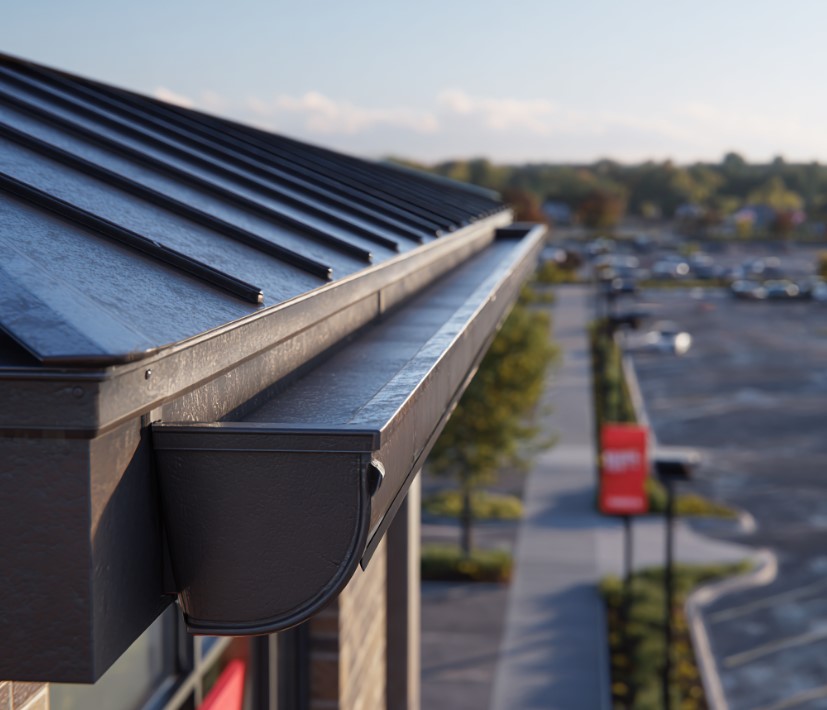
Batesville Commercial Gutter Installation Should Start With the Roof
Commercial gutter installation in Batesville should begin with one simple question:
Where does all the roof water need to go?
The answer depends on the roof area, slope, roofing material, gutter size, number of outlets, downspout placement, surrounding grade, and the property layout.
A commercial drainage system has three basic jobs:
- Collect water efficiently.
- Move it off the roof without backing up.
- Discharge it somewhere that won’t create another problem.
Existing buildings may also have changed over the years. Roof repairs, additions, new mechanical equipment, settling, or previous drainage work can all affect how runoff moves.
Sometimes cleaning solves the problem.
Sometimes a section needs realignment or repair.
Sometimes the building needs a better-designed gutter and downspout system.
The right answer depends on what the water is actually doing.
Greensburg Commercial Properties Need the Same Careful Diagnosis
Commercial properties around Greensburg range from small businesses and churches to apartments, shops, storage facilities, and larger industrial buildings.
Different roofs create different drainage demands.
The Greensburg, IN commercial roofers you bring in should look beyond the obvious clog and consider how the roof surface, gutters, downspouts, drains, and ground-level discharge all work together.
One building may simply need debris removed.
Another may have a flat roof where leaves repeatedly collect around a scupper.
Another may have an undersized downspout.
And another may drain perfectly until the water hits the ground and pools against the building.
Those aren’t the same problem, so they shouldn’t get the same recommendation.
That’s where experience earns its lunch.
Cleaning, Repair, or Replacement?
Nobody needs a brand-new gutter system just because there are leaves in it.
Cleaning is usually enough when the drainage system is otherwise sound, and debris is the main problem.
Repair or adjustment may make more sense when:
- Seams are leaking
- Fasteners are loose
- Gutters have sagged
- Pitch is incorrect
- Downspouts are damaged
- Sections have pulled away from the building
Replacement or redesign may be worth considering when:
- Corrosion or damage is widespread
- Overflow continues after cleaning
- The system is consistently undersized
- Outlets can’t keep up with runoff
- The roof has changed over time
- The same repairs keep coming back
The goal isn’t to replace something that still works.
It’s to stop having to solve the same water problem every August.
A Practical Pre-Storm Check for Property Managers
Before the next stretch of heavy weather, walk the building from the ground and check whether:
- Gutters are visibly clear
- Downspouts are attached and undamaged
- No sections are obviously sagging
- Water has somewhere to go after leaving the downspout
- Soil isn’t washing away below drainage areas
- Roof drains and scuppers appear clear
- Puddles aren’t forming near entrances
- Exterior walls don’t show new runoff streaks
- Prior leak areas remain dry after rain
If something can’t be safely checked from the ground, bring in someone who works around commercial roofs for a living.
How Ladder Lions Roofing Handles Commercial Drainage Problems
We’ve worked on roofs across Southeast Indiana since 1990, and one thing becomes pretty obvious after enough years in the trade.
Roofing problems don’t respect departmental boundaries.
A gutter problem can become a roof problem. A roof problem can become a wall problem. A drainage problem can become a foundation concern.
So we look at how the pieces work together.
Ladder Lions Roofing provides commercial roofing and gutter services in Batesville, Greensburg, and surrounding Southeast Indiana communities. Depending on the property, that may include:
- Commercial gutter installation
- Gutter replacement
- Box gutters
- Seamless gutters
- Custom-fabricated commercial gutters
- Heavy-gauge downspouts
- Downspout repair
- Gutter realignment
- Gutter resealing and reattachment
- Gutter cleaning
- Flat roof repair
- Metal roof repair
- Membrane repair
- Flashing repair
- Roof deck repair
We’re locally owned, fully licensed and insured, and we’ve spent more than 35 years seeing what Indiana weather can do to a building.
Ladder Lions Roofing is also an Owens Corning Platinum Preferred Contractor and a GAF Master Elite Contractor.
Those credentials matter, but good drainage still comes down to the basics.
Plan the work properly. Find the actual problem. Explain it clearly. Fix what needs fixing. Stand behind the work.
Fancy language has yet to improve water flow.
Commercial Gutter Questions We Hear Most Often
Commercial drainage problems can look simple from the ground, but the cause is not always obvious. These common questions cover what property owners often want to know about gutter overflow, drainage capacity, repairs, and ongoing maintenance.
How do overflowing gutters affect a commercial foundation?
Overflowing gutters can repeatedly saturate soil beside the building, contributing to erosion, drainage problems, basement or lower-level moisture, and trouble around slabs or foundations.
Why do commercial gutters overflow even after cleaning?
A clean system can still overflow if gutters are poorly pitched, damaged, undersized, or connected to restricted downspouts. Large roof areas can also produce more runoff than the drainage system was designed to handle.
Are heavy-gauge commercial downspouts worth considering?
They can be a good fit where the building handles substantial runoff or where downspouts are exposed to impact and wear. Proper sizing and placement matter just as much as material thickness.
What drainage systems are used on commercial flat roofs?
Commercial flat roofs may use roof drains, scuppers, box gutters, internal drains, downspouts, or a combination of systems. The design depends on roof size, slope, layout, and discharge location.
How do I know whether my gutters need repair or replacement?
Repair is often practical when the problem is limited to seams, fasteners, small pitch issues, or damaged downspouts. Replacement may make more sense when damage is widespread, capacity is inadequate, or overflow keeps returning.
Should commercial gutters be checked after major storms?
Yes. Strong storms can move debris, loosen sections, damage downspouts, and block drainage points. A ground-level check afterward can reveal overflow marks, erosion, sagging, or new pooling.
Does Ladder Lions Roofing serve commercial properties in Batesville and Greensburg?
Yes. Ladder Lions Roofing provides commercial gutter and roofing services in Batesville, Greensburg, and throughout Southeast Indiana.
Don’t Let the Next August Storm Choose Where the Water Goes
Commercial gutters have one fairly unglamorous job.
Move water where it belongs.
When they do that well, nobody pays much attention. When they don’t, the evidence can show up on the roof, exterior walls, sidewalks, landscaping, foundation, and eventually inside the building.
If your commercial gutters are overflowing, sagging, draining slowly, or dumping water beside the property, it’s worth finding out why before the next hard August rain makes the diagnosis for you. Ladder Lions Roofing has served Southeast Indiana since 1990, helping business owners and property managers make practical roofing and drainage decisions without the sales routine.
If you have a commercial property in Batesville, Greensburg, or a nearby community, call (812) 932-0506 to schedule your free estimate.
Straight answers. Solid workmanship.
Let Us Tame Your Roof!
Recent Articles
Commercial Roofing
Commercial Roof Maintenance: A Practical Guide for Building Owners
September 22, 2026
Residential Roofing
The Platinum Standard: Why Shingle Manufacturer Certifications Control the Life of Your Roof Warranty
September 15, 2026

Residential Roofing
GAF vs Owens Corning Shingles: An Honest Comparison
September 15, 2026
Commercial Gutters
Commercial Gutter Overload: Avoiding Building Erosion and Foundation Damage During August Storms
August 17, 2026