.png)
Wind Damage 101: How to Tell If Your Roof Needs Attention After a Storm in Batesville
February 3, 2026
•
Written By
Ladder Lions Roofing

When the wind rolls through Batesville, it does not usually send a warning. One minute it is calm. The next, your trees are bending and the siding is humming. By morning, things look mostly back to normal.
Mostly.
That is the part that makes wind tricky. The yard might look fine, but your roof could be telling a different story.
The real question is not just whether it was windy. It is this:
Did your roof take damage, and how can you tell?
In this guide, you will learn:
- The most common signs of wind roof damage
- How to tell if your roof needs attention after a storm
- When damage requires immediate action
- How to decide between repair and replacement
Let Ladder Lions Roofing walk through exactly what to look for and how to respond with confidence.
Why Wind Damage Is Not Always Obvious
Wind does not always rip shingles off in dramatic fashion. Sometimes it works quietly.
When strong gusts move across your roof, they create uplift pressure. That pressure is strongest along the edges, corners, and ridgelines. Those areas tend to take the brunt of the force. Shingles can lift slightly, breaking the adhesive seal underneath.
From the ground, everything may still look intact. But once that seal is compromised, the next storm has an easier time doing more damage.
Older shingles are especially vulnerable. Over time, heat, sun exposure, and normal aging reduce the strength of the seal strip. That means a gust that might not have affected your roof ten years ago could cause real movement today.
That is how small problems turn into bigger storm roofing issues over time. One storm weakens it. The next storm exposes it. The one after that creates a leak.
In a place like Batesville, where storms are part of life, knowing how to recognize early warning signs matters.
Step One: Look for Visible Signs of Wind Roof Damage
Start simple. Stay on the ground.
Walk around your home and look carefully at the roofline.
Missing or Displaced Shingles
If shingles are lying in your yard, that is a clear sign something is wrong.
Look for uneven sections or darker patches where shingles may have lifted or shifted. Even one missing shingle exposes the layer beneath it. That is how a weather-damaged roof begins leaking.
Pay special attention to corners and roof edges. Those areas experience the most wind pressure and are often the first places damage shows up.
Lifted or Curling Shingle Edges
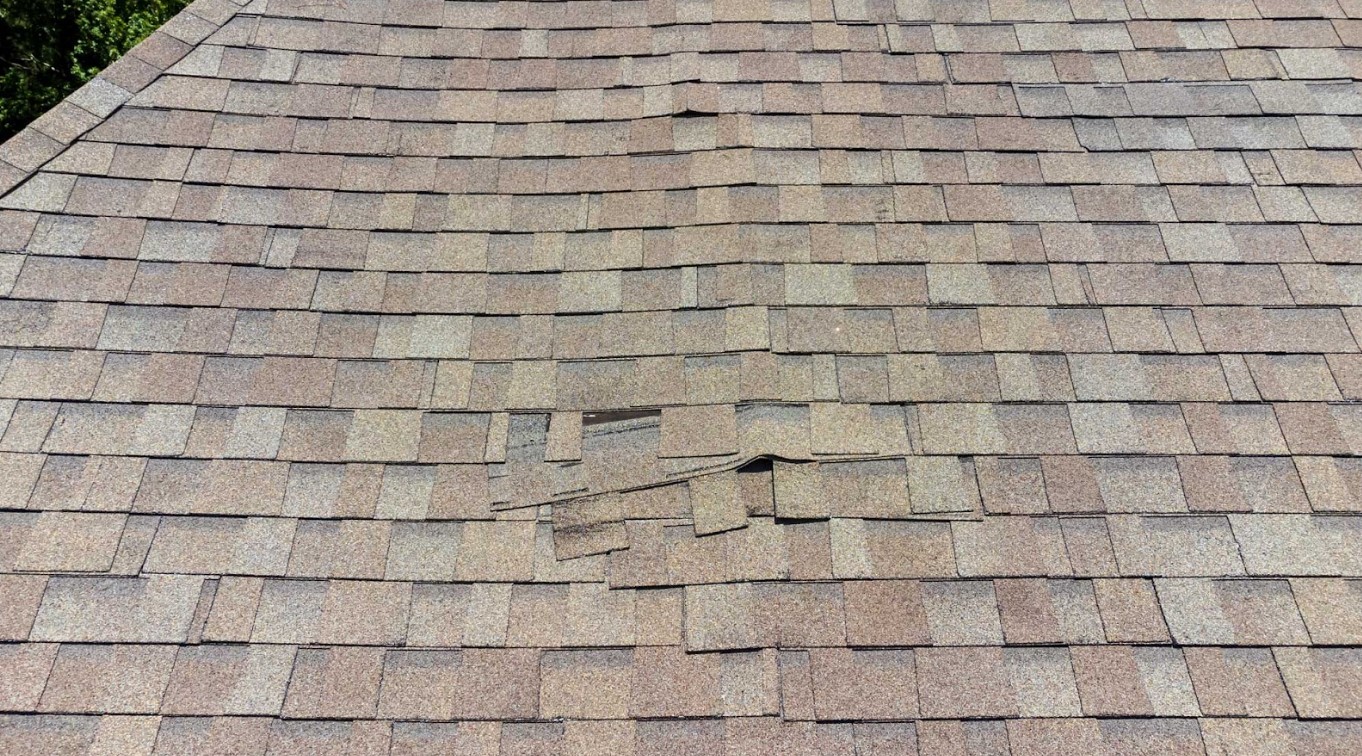
You may notice shingle corners that appear slightly raised or curled. Wind can break the seal even if the shingle stays in place.
If shingles no longer lie flat, your roof likely needs attention, even if nothing has blown off. A lifted edge today can become a missing shingle in the next storm.
Step Two: Watch for Subtle Signs After the Storm
Some of the most important signs of wind roof damage are not dramatic.
Creased Shingles
When shingles lift and bend in high winds, they often develop a faint horizontal crease across the middle. From the ground, they may look fine. Up close, that crease weakens the material.
Creased shingles are one of the most common forms of roof damage after a storm in Batesville.
A crease tells you the shingle flexed beyond its limit. Even if it has settled back into place, it has lost strength. Over time, that weak spot becomes the place where water finds its way in.
If your roof is under 15 years old and damage is isolated, roof repair may be possible. If creasing appears across multiple slopes, it may signal broader storm roofing issues.
Granules Collecting in Gutters
After a heavy wind and rain event, check your gutters.
Shingle granules protect against sun exposure. If you see an unusual amount collecting in your downspouts, your roof may have taken surface damage.
Granule loss does not always mean immediate leaks, but it does mean your roof has been stressed. Think of it as protective armor wearing thin. Once enough granules are gone, shingles age faster and become more brittle during future wind events.
Step Three: Check Inside for Signs Your Roof Needs Attention
Wind damage does not always show up outside first.
Look inside your home for:
- Water stains on ceilings
- Damp attic insulation
- Bubbling paint near rooflines
- Musty odors
If you notice interior changes after a storm, your roof needs attention right away.
Water does not always drip straight down. It can travel along decking or framing before appearing inside. That means the small stain you see could be connected to a larger issue above.
What started as minor wind damage can escalate quickly once moisture gets inside. Roof decking can weaken. Insulation can lose effectiveness. Mold can begin forming long before you realize there is a problem.
How Different Roofing Materials Show Wind Damage
Not all roofing systems respond the same way to wind. Knowing what type of roof you have helps you understand what to look for.
Asphalt Shingles
Common throughout Batesville, asphalt shingles often show wind damage as lifting, creasing, or missing tabs. Adhesive seal failure is the most frequent issue.
Metal Roofing
Metal panels are less likely to tear off but may show loose fasteners or lifted seams after high winds. Rattling sounds during storms can also signal movement that should be inspected.
Impact-Resistant Shingles
These are designed to perform better in storms, but they can still show signs of seal failure or edge lifting. No roofing system is completely immune to wind.
No matter the material, if something looks uneven, loose, or out of place after a storm, it is worth having checked.
When Does Wind Damage Require Immediate Attention?
Some situations should not wait.
Your roof likely needs prompt attention if you notice:
- Active leaking
- Multiple missing shingles
- Sagging rooflines
- Flashing visibly pulled away
Active leaks should be addressed as soon as possible. Even a small amount of water can begin softening decking within days.
Multiple missing shingles expose larger sections of underlayment, which is not designed for long-term exposure.
Sagging areas may indicate structural stress or water saturation beneath the surface.
Flashing that has pulled away creates direct openings for water intrusion, especially around chimneys and vents.
In those cases, delaying inspection can lead to structural damage and more expensive repairs.
If you are unsure what steps to take immediately after a storm, we have outlined the full process in our guide on What To Do if a Storm Damages Your Roof in Batesville. It explains how to document damage, contact insurance, and move forward safely.
Repair or Replacement: How to Know the Difference
Once you have identified signs of wind roof damage, the next question is whether repair will solve the problem.
Repair is often enough when:
- Damage is limited to one area
- The roof is relatively new
- Shingles can be matched
In those cases, replacing a few shingles and resealing the area may restore full protection.
Replacement may be necessary when:
- Creasing appears across large sections
- Granule loss is widespread
- The roof is approaching 20 to 25 years old
- Multiple prior repairs exist
Age plays a major role. Insurance companies often consider the remaining lifespan of the roof when evaluating storm claims. If a roof is already near the end of its service life, roof replacement may make more long-term sense than repeated patching.
Matching also matters. If shingles are discontinued or heavily faded, spot repairs can leave uneven areas that do not seal or perform consistently.
An honest inspection looks at the whole picture, not just the obvious damage. The goal is not to repair what can be repaired or replace what does not need replacing. It is to make sure your roof truly has the protection it needs moving forward.
Wind Roof Damage Questions Homeowners in Batesville Ask Most
After a strong windstorm moves through Batesville, it is normal to have questions about what is serious and what can wait. Here are straightforward answers to the concerns we hear most often about roof damage after a storm.
How soon should I check my roof after a windstorm?
You should check your roof within a few days after a windstorm. The sooner you look for signs of wind roof damage, the easier it is to prevent small issues from becoming leaks. Early inspection also strengthens any potential insurance claim related to roof damage after a storm.
Can wind damage be hard to see at first?
Yes, wind damage can be hard to see at first. Shingles may lose their seal or develop creases that are not visible from the ground. These subtle issues often lead to larger storm roofing problems if they go unnoticed.
Does homeowners insurance cover roof damage from wind?
Most homeowners insurance policies do cover roof damage from wind. Coverage generally applies to sudden storm-related damage, though deductibles and policy details vary. Prompt documentation is important if you suspect a weather-damaged roof.
Is it safe to inspect my roof myself after high winds?
No, it is not safe to climb onto your roof after high winds. A roof that has shifted or loosened can be unstable even if it appears intact. A ground-level check is reasonable, but a professional estimate is the safest way to evaluate it thoroughly.
How long should a roof last in this area?
A roof in this area should last about 20 to 30 years with proper installation and ventilation. Seasonal weather patterns in Batesville, including strong winds and temperature swings, can influence that lifespan. Routine inspections help ensure your roof reaches its expected service life.
Final Thoughts: If You Are Wondering, It Is Worth Checking
After a strong windstorm in Batesville, it is normal to wonder if your roof took a hit. The key is knowing what to look for.
Signs of wind roof damage do not always scream for attention. Sometimes they whisper.
Missing shingles, lifted edges, granules in the gutter, faint creases. These are all signals that your roof may need attention after a storm.
We have been working on roofs in this community since 1990. We believe in straightforward answers, solid workmanship, and treating people with respect.
If you suspect roof damage after a storm or simply want peace of mind, schedule your free estimate today. We will take a look and tell you exactly what we see.
Let Us Tame Your Roof.
Recent Articles
Commercial Roofing
Commercial Roof Maintenance: A Practical Guide for Building Owners
September 22, 2026
Residential Roofing
The Platinum Standard: Why Shingle Manufacturer Certifications Control the Life of Your Roof Warranty
September 15, 2026
Residential Roofing
GAF vs Owens Corning Shingles: An Honest Comparison
September 15, 2026
Commercial Gutters
Commercial Gutter Overload: Avoiding Building Erosion and Foundation Damage During August Storms
August 17, 2026