.png)
Finding the Invisible Fissures: How Drone Thermal Imagery Catches Hidden Summer Roof Damage in Southeast Indiana
July 20, 2026
•
Written By
Ladder Lions Roofing
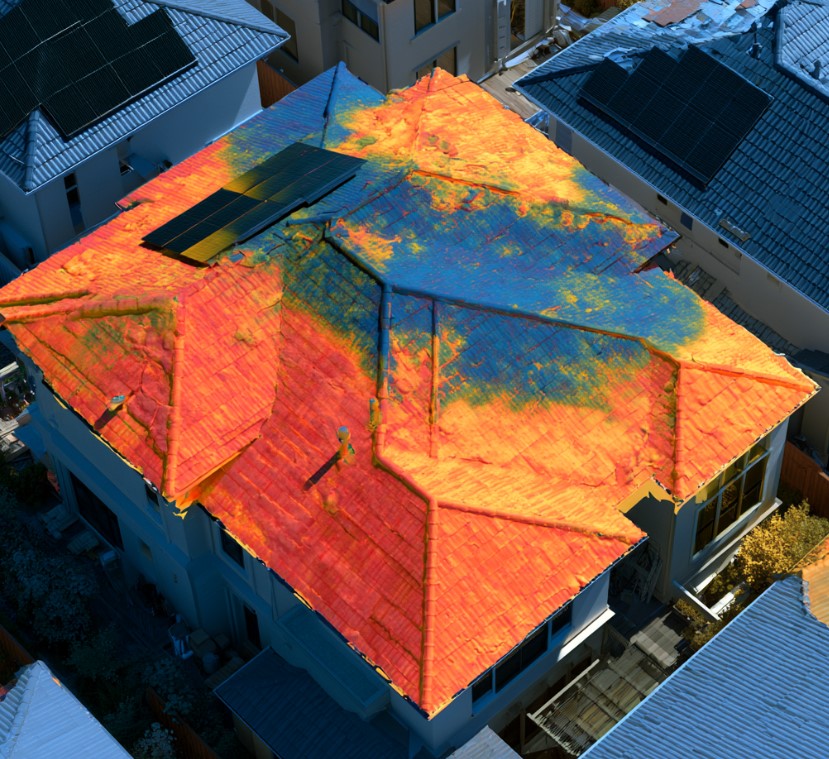
A drone thermal roof inspection uses an infrared camera to identify temperature differences across a roof. Those patterns may indicate trapped moisture, damaged insulation, air leaks, or areas that need a closer look. The camera does not see through the roof, but it can help narrow down where a hidden problem may be starting.
Your roof can look fine from the driveway and still be hiding trouble underneath.
Maybe one of the upstairs bedrooms never cools down. Maybe the attic smells musty after a summer storm. Maybe a ceiling stain appears, dries up, and returns after the next heavy rain.
That is where a drone thermal roof inspection in Southeast Indiana can help. It gives a trained roofer another way to investigate unusual conditions without turning the first visit into a guessing game.
Here is what you will learn:
- How summer weather affects roofs in Southeast Indiana
- What shingle blistering looks like
- What thermal drone imagery can and cannot detect
- How a drone roof estimate works
- When hidden damage may call for repair or replacement
Not every unusual temperature pattern means the roof is failing. It does mean there may be a spot worth checking before it becomes a bucket-in-the-living-room problem.
Why Summer Weather Is Tough on Southeast Indiana Roofs
A roof is built to take punishment. That is part of the job.
Still, years of Indiana sun, humidity, wind, and hard rain eventually start finding weak spots.
Asphalt shingles absorb heat throughout the day, then cool after sunset. That repeated expansion and contraction can stress shingles, flashing, sealants, and fasteners.
Summer conditions may also cause:
- Shingles to dry out and become brittle
- Humidity builds up inside poorly ventilated attics
- Heavy rain to enter small gaps around flashing
- Wind to loosen shingles and break adhesive seals
- Heat to collect beneath the roof deck
Older roofs often show these problems sooner, especially as they approach the typical 20-to-30-year lifespan for many asphalt shingle systems in this region.
Age alone does not determine whether or not you need a roof replacement. Installation quality, ventilation, maintenance, and weather exposure all matter.
What Is Shingle Blistering?
Shingle blistering in summer heat can look like small raised bumps or bubbles on asphalt shingles.
Blisters may form when moisture or air becomes trapped inside the material. As the roof heats up, those pockets can expand and become more noticeable.
Some stay intact. Others pop and expose the inner shingle mat, potentially shortening the material’s useful life.
Blisters, Hail Marks, or Ordinary Wear?
Blistering and hail damage can look similar.
A popped blister may leave a small exposed area. Hail can also knock away granules, leaving a mark. Normal aging may add even more surface wear.
The cause matters because it can affect whether the problem is repairable, storm-related, or part of broader roof deterioration.
Not every bump means the roof is finished. It does mean the area deserves a closer look from someone who can tell heat damage, hail damage, and ordinary wear apart.
Homeowners should not scrape, press, or walk on suspected blisters. Hot shingles are easier to damage, and there is no reason to turn a small question into a larger repair.
What Thermal Drone Imagery Can See
A thermal camera measures surface temperature.
It does not look through shingles, decking, or insulation. It also does not show water moving inside the roof.
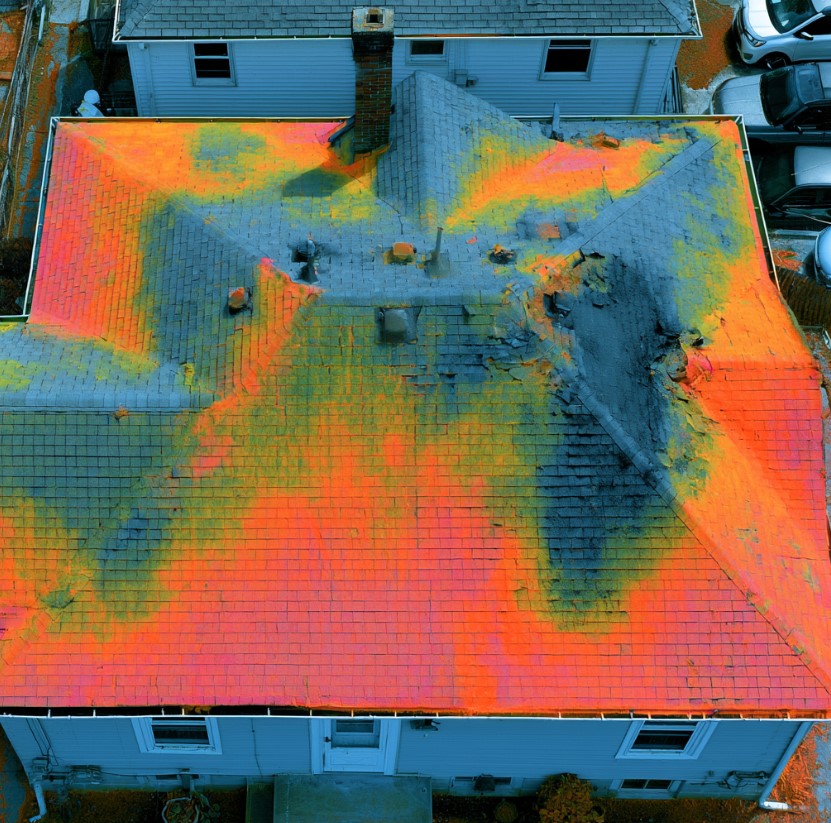
What it can show is where one section heats up or cools down differently from the surrounding area.
Those patterns may point to:
- Trapped moisture
- Wet insulation
- Missing or compressed insulation
- Possible air leakage
- Unusual heat retention
- Areas that need closer hands-on evaluation
Moisture often holds heat differently than dry materials. Under the right conditions, a damp section may remain warmer than the rest of the roof, which begins to cool.
Think of it like muddy bootprints on a clean floor. The print does not tell the whole story, but it shows where to start looking.
Thermal Imaging Is a Tool, Not a Final Diagnosis
Thermal imagery works best when combined with other information, including:
- Roof age
- Recent weather
- Interior stains
- Attic conditions
- Visible shingle damage
- Flashing and ventilation
Sunlight, shade, wind, roofing material, and time of day can all affect the image.
That is why the person interpreting the pattern matters as much as the camera taking it.
When Thermal Imaging Is Most Useful
Thermal imagery is not necessary for every roof estimate.
Sometimes the problem is obvious. A missing shingle is a missing shingle. Loose flashing does not need a technology conference.
Thermal imaging is more useful when:
- A ceiling leak has no clear source
- Moisture keeps returning after prior repairs
- The roof has several valleys, skylights, vents, and transitions
- One area of the home stays unusually warm
- A storm recently passed through Southeast Indiana
- The roof is aging but shows little visible damage
- The homeowner wants documentation before approving work
- The roof is steep, large, or difficult to assess safely
Recent rainfall, sunlight, wind, roof material, and scan timing all affect how useful the results will be.
The drone is smart, but it still has to work with Indiana weather. That can be a humbling arrangement for anybody.
How a Drone Roof Estimate Works
Most homeowners want to know what is wrong, what it will take to fix it, and whether the recommendation makes sense.
Here is how a drone-assisted estimate typically works with Ladder Lions Roofing.
1. Quote
You contact our team and explain what you have noticed, such as a ceiling stain, storm damage, missing shingles, or an aging roof.
2. Consult
We review the roof’s age, the symptoms, and any recent weather that may be relevant.
3. Inspect
We use the methods that fit the situation. That may include a ground-level review, attic evaluation, hands-on assessment, standard drone photography, or thermal imagery.
4. Review
We explain the findings in plain language and review any useful photographs or thermal images with you.
5. Support
We recommend the next sensible step, whether that means monitoring the roof, completing a repair, improving ventilation, or planning for replacement.
The goal is not to sell you the biggest job. The goal is to figure out what the roof actually needs.
How to Find Roof Leaks in Indiana Before They Spread
Homeowners can learn quite a bit from inside the attic and from a safe spot on the ground.
Look for:
- Water stains on ceilings or walls
- Damp attic insulation
- Darkened roof decking
- Peeling paint near rooflines
- Musty odors
- Rust around vents or fasteners
- Damaged flashing
- Missing, lifted, or cracked shingles
- Water near chimneys, skylights, or vents
- Overflowing or misaligned gutters
- Daylight showing through the roof deck
Water does not always travel straight down. A stain in one room may come from an opening several feet away because water can move along decking, framing, or insulation before becoming visible.
Do not climb onto a hot, steep, wet, or damaged roof.
You do not need to prove your courage on a ladder. That is what trained, insured roofing crews are for.
Does Hidden Damage Mean You Need a New Roof?
No. Hidden damage does not automatically mean the entire roof needs to be replaced.
A repair may be enough when:
- Damage is limited to one area
- Flashing has failed around a chimney, vent, skylight, or wall
- Only a few shingles are damaged
- A gutter or drainage issue is causing water intrusion
- The roof deck remains sound
- The roof still has useful life remaining
Replacement may make more sense when:
- Damage is widespread
- The roof is near the end of its expected lifespan
- Leaks keep returning in different areas
- Large sections of decking or insulation are affected
- Shingles are brittle, curling, cracking, or losing heavy amounts of granules
- Earlier repairs are failing
Sometimes a repair is the right answer.
Sometimes continuing to patch the same worn-out roof is like putting fresh tape on a garden hose that already has six other leaks.
A good estimate should explain the difference plainly.
Local Roof Repair Across Lawrenceburg and Southeast Indiana
Ladder Lions Roofing provides local residential roofing repair in Lawrenceburg and communities throughout Southeast Indiana, including Batesville, Greensburg, Aurora, Bright, Brookville, and Guilford.
Our related services include:
- Roof leak repair
- Asphalt shingle repair
- Shingle replacement
- Flashing repair
- Vent and skylight repair
- Roof deck repair
- Soffit and fascia repair
- Gutter repair
- Storm damage evaluations
- Residential roof replacement
We are locally owned, which means the people making decisions are right here in the same communities we serve.
Our roofing history goes back to 1990. Ladder Lions Roofing is also an Owens Corning Platinum Preferred Contractor and a GAF Master Elite contractor.
Those credentials matter, but they do not replace the basics.
Show up prepared. Explain the work clearly. Respect the homeowner. Honor the commitment.
That is still how good roofing gets done.
Ask About a Free Drone Roof Estimate in Batesville
Homeowners seeking a free drone roof inspection in Batesville, IN, can contact Ladder Lions Roofing to determine whether drone imagery is appropriate for their property.
Not every roof needs a thermal scan. Some concerns can be identified through a standard estimate. Others benefit from additional documentation or a better view of difficult-to-access areas.
Our team can explain which approach makes sense for your roof.
Common Questions About Thermal Drone Roof Estimates
Thermal imaging is useful, but it also raises a few fair questions. Homeowners usually want to know what the camera can actually find, when the technology helps, and whether it changes the repair process. Here are the answers we give most often.
Can a thermal drone find a roof leak?
A thermal drone can detect temperature differences that may indicate trapped moisture, wet insulation, or another roofing issue. A roofing professional still needs to confirm the source.
Can thermal imaging see through shingles?
No. Thermal cameras measure surface temperatures and cannot see through shingles, decking, or insulation.
What causes roof shingles to blister in summer?
Roof shingles may blister when moisture or air becomes trapped inside the material. Summer heat can cause those pockets to expand or become more visible.
Is drone imagery useful after a storm?
Yes. Drone imagery can help document visible roof conditions and identify areas that deserve closer evaluation, especially on steep or difficult-to-access roofs.
Can thermal imaging detect wet insulation?
Thermal imagery may show temperature patterns consistent with wet insulation, but a trained professional must confirm the finding.
How do I know whether my roof needs repair or replacement?
The decision depends on the roof’s age, the extent of the damage, the condition of the decking, and whether the problem is isolated or widespread.
Does Ladder Lions Roofing help with storm damage insurance claims?
Yes. Ladder Lions Roofing helps homeowners document storm-related roof conditions and understand the insurance claim process for roofing.
Does Ladder Lions Roofing offer financing?
Yes. Financing options are available for qualified roofing projects.
Your Roof Does Not Have to Leak in Plain Sight
Not every roof problem announces itself with a missing shingle or water dripping into a bucket.
Sometimes the first clue is a warm bedroom, a faint ceiling stain, a musty attic, or a section of roofing that holds heat differently from the rest.
Thermal drone imagery gives us another way to investigate those clues without pretending the technology can answer every question on its own.
Ladder Lions Roofing has been working on roofs across Southeast Indiana since 1990. We believe in careful estimates, practical recommendations, and telling homeowners what we actually see.
No scare tactics. No mysterious roofing talk. No automatic push toward replacement.
Just a closer look and an honest answer.
Call (812) 932-0506 or email sales@ladderlions.com to request a free roof estimate and ask whether drone thermal imagery makes sense for your home.
Let Us Tame Your Roof!
Recent Articles
Commercial Roofing
Commercial Roof Maintenance: A Practical Guide for Building Owners
September 22, 2026
Residential Roofing
The Platinum Standard: Why Shingle Manufacturer Certifications Control the Life of Your Roof Warranty
September 15, 2026
Residential Roofing
GAF vs Owens Corning Shingles: An Honest Comparison
September 15, 2026
Commercial Gutters
Commercial Gutter Overload: Avoiding Building Erosion and Foundation Damage During August Storms
August 17, 2026